


Conventional standard therapies address some pathways involved in vascular inflammation of GPA and MPA, but do not directly address complement. When TAVNEOS® is added to standard therapy, the combination addresses multiple pathways.1-3
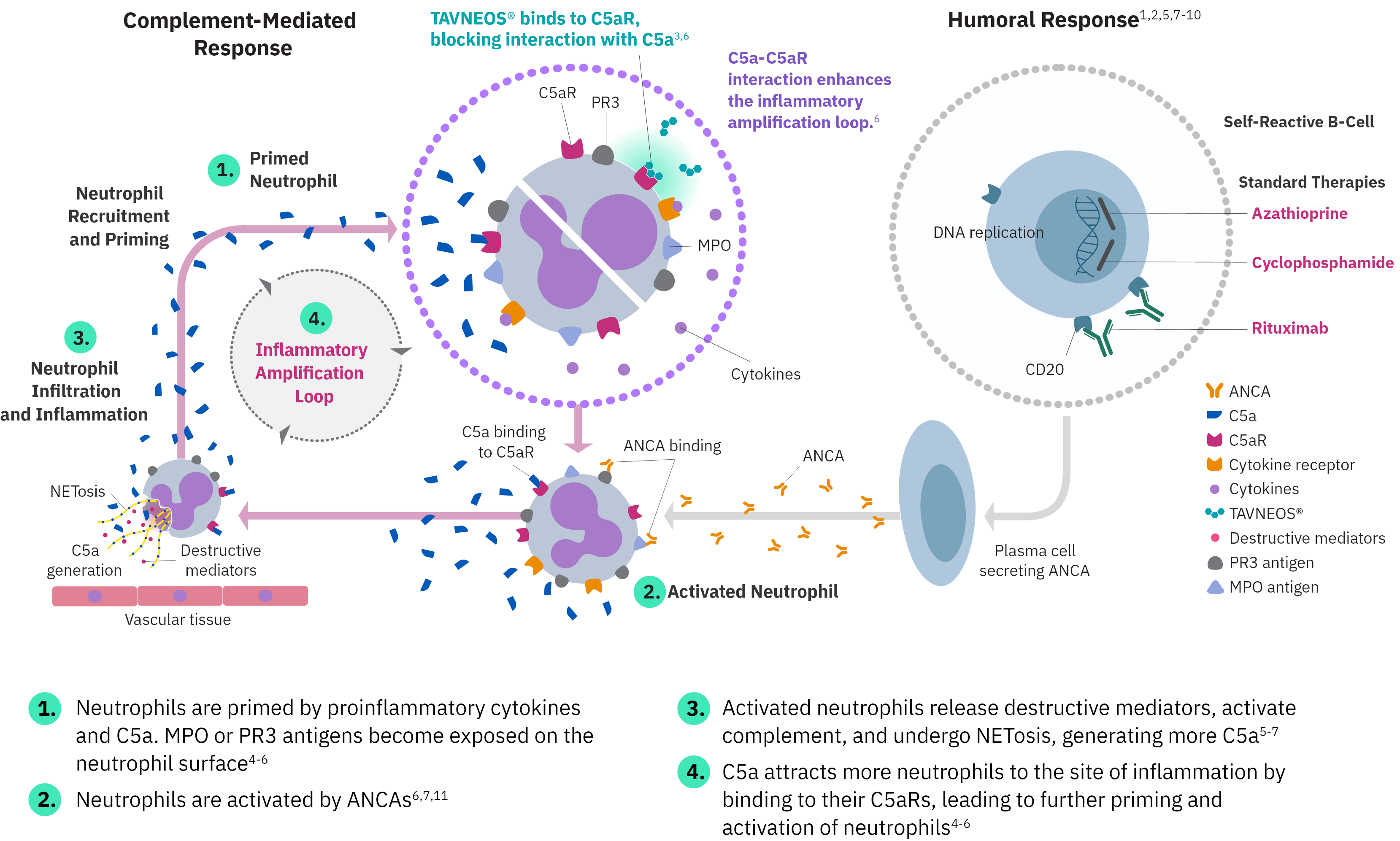
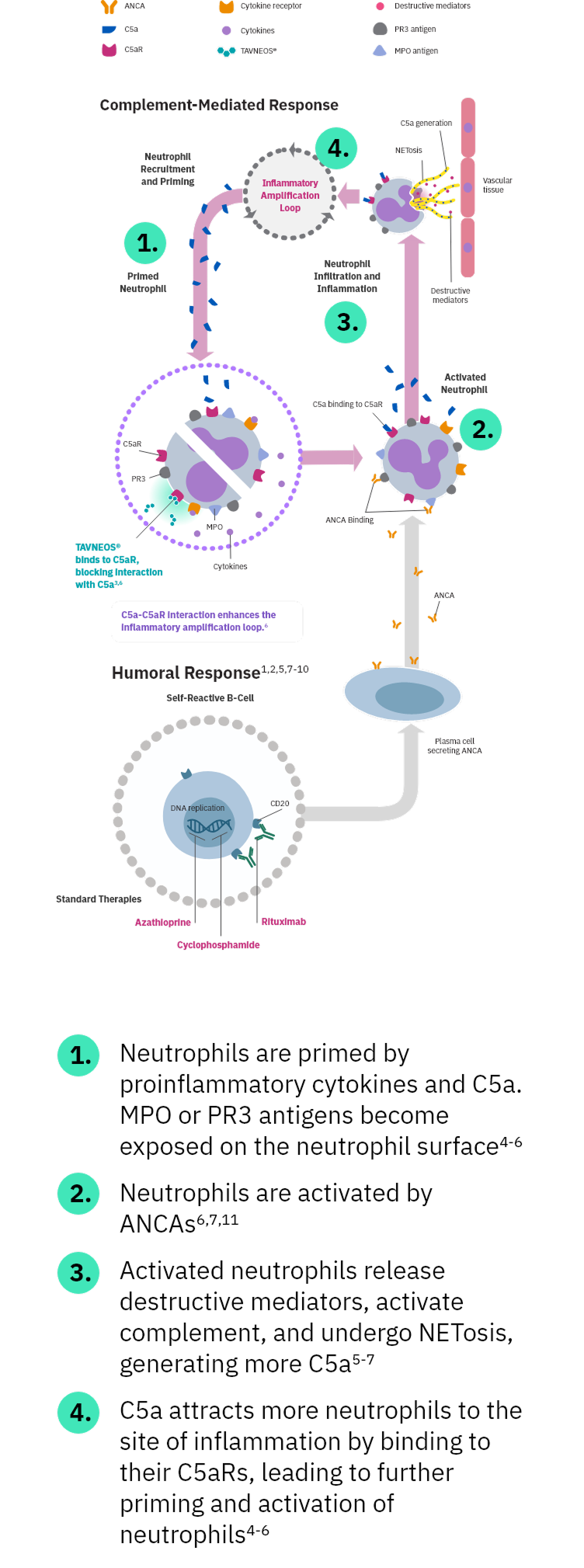
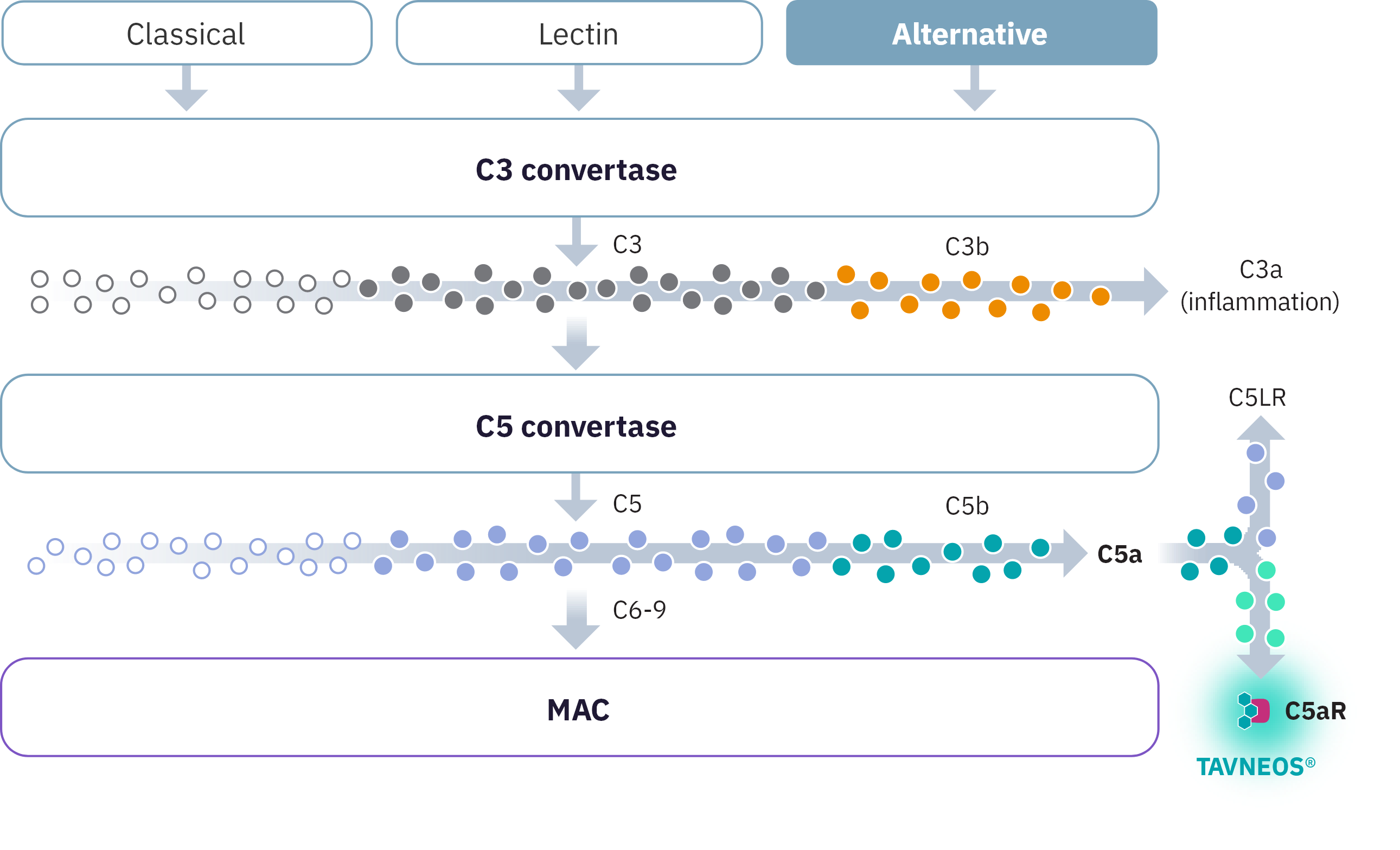
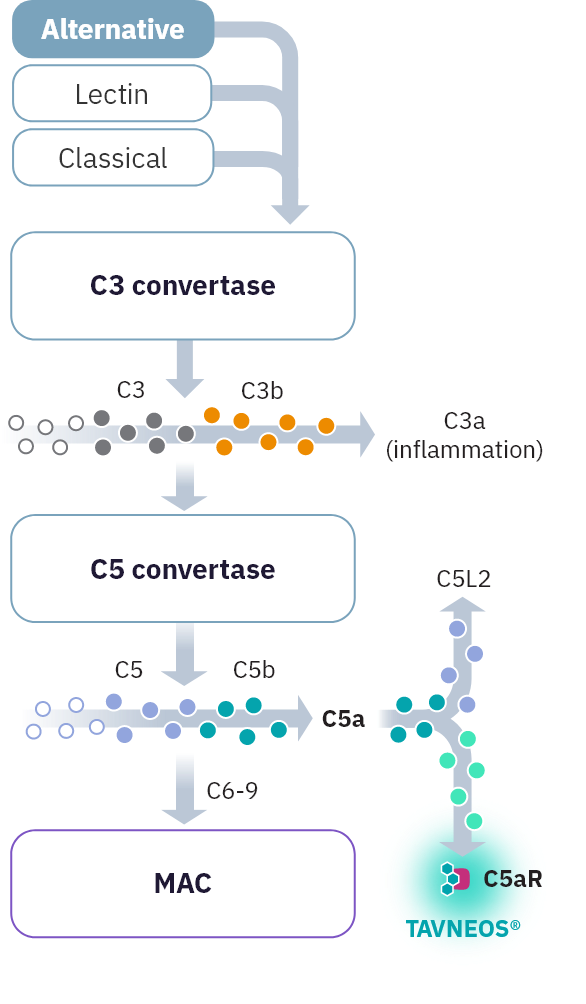
The precise mechanism by which TAVNEOS® exerts a therapeutic effect in patients with severe active GPA or MPA has not been definitively established.3
ANCA = anti-neutrophil cytoplasmic autoantibody; C3 = complement fragment 3; C3b = complement fragment 3b; C5 = complement fragment 5; C5a = complement fragment 5a; C5aR = C5a receptor; C5b = complement fragment 5b; C5LR = C5a-like receptor; C6-9 = complement fragment 6-9; GPA = granulomatosis with polyangiitis; MAC = membrane attack complex; MOA = mechanism of action; MPA = microscopic polyangiitis; MPO = myeloperoxidase; NET = neutrophil extracellular traps; PR3 = proteinase 3.

Serious hypersensitivity to avacopan or to any of the excipients.
Hepatotoxicity: Serious cases of hepatic injury have been observed in patients taking TAVNEOS, including life-threatening events. In the postmarketing setting, vanishing bile duct syndrome (VBDS) as a consequence of liver injury, including cases with a fatal outcome, has been reported. These events occurred predominantly in Japan in patients aged 65 years and older, but VBDS may affect patients of any age or ethnicity who are receiving TAVNEOS. Obtain liver test panel before initiating TAVNEOS, every 4 weeks after start of therapy for 6 months and as clinically indicated thereafter. For patients of Japanese descent, consider more frequent laboratory testing: every 2 weeks after the start of therapy for the first 3 months, followed by laboratory testing every 4 weeks for the next 3 months of treatment, and as clinically indicated thereafter. If a patient receiving treatment with TAVNEOS presents with an elevation in alanine aminotransferase [ALT] or aspartate aminotransferase [AST] to >3 times the upper limit of normal (ULN), evaluate promptly and consider pausing treatment as clinically indicated. If AST or ALT is > 5 times the ULN, or ALT or AST > 3 times the ULN with total bilirubin > 2 times the ULN, or alkaline phosphatase ≥ 2 times the ULN, or if the patient has clinical symptoms such as jaundice or pruritus, discontinue TAVNEOS until TAVNEOS-induced liver injury is ruled out. Immediately and permanently discontinue TAVNEOS if VBDS is suspected. TAVNEOS is not recommended for patients with active, untreated, and/or uncontrolled chronic liver disease (e.g., chronic active hepatitis B, untreated hepatitis C, uncontrolled autoimmune hepatitis) and cirrhosis. Consider the risks and benefits before administering this drug to a patient with liver disease.
Serious Hypersensitivity Reactions: Cases of angioedema occurred in a clinical trial, including 1 serious event requiring hospitalization. Discontinue immediately if angioedema occurs and manage accordingly. TAVNEOS must not be readministered unless another cause has been established.
Hepatitis B Virus (HBV) Reactivation: Hepatitis B reactivation, including life-threatening hepatitis B, was observed in the clinical program. Screen patients for HBV. For patients with evidence of prior infection, consult with physicians with expertise in HBV and monitor during TAVNEOS therapy and for 6 months following. If patients develop HBV reactivation, immediately discontinue TAVNEOS and concomitant therapies associated with HBV reactivation, and consult with experts before resuming.
Serious Infections: Serious infections, including fatal infections, have been reported in patients receiving TAVNEOS. The most common serious infections reported in the TAVNEOS group were pneumonia and urinary tract infections. Avoid use of TAVNEOS in patients with active, serious infection, including localized infections. Consider the risks and benefits before initiating TAVNEOS in patients with chronic infection, at increased risk of infection, or who have been to places where certain infections are common.
The most common adverse reactions (≥5% of patients and higher in the TAVNEOS group vs. prednisone group) were nausea, headache, hypertension, diarrhea, vomiting, rash, fatigue, upper abdominal pain, dizziness, blood creatinine increased, and paresthesia.
Avoid co-administration of TAVNEOS with strong and moderate CYP3A4 enzyme inducers. Reduce TAVNEOS dose when co-administered with strong CYP3A4 enzyme inhibitors to 30 mg once daily. Consider dose reduction of CYP3A4 substrates when co-administering TAVNEOS. Co-administration of avacopan and 40 mg simvastatin increases the systemic exposure of simvastatin. While taking TAVNEOS, limit simvastatin dosage to 10 mg daily (or 20 mg daily for patients who have previously tolerated simvastatin 80 mg daily for at least one year without evidence of muscle toxicity). Consult the concomitant CYP3A4 substrate product information when considering administration of such products together with TAVNEOS.
TAVNEOS is available as a 10 mg capsule.
TAVNEOS (avacopan) is indicated as an adjunctive treatment of adult patients with severe active anti-neutrophil cytoplasmic autoantibody (ANCA)-associated vasculitis (granulomatosis with polyangiitis [GPA] and microscopic polyangiitis [MPA]) in combination with standard therapy including glucocorticoids. TAVNEOS does not eliminate glucocorticoid use.
Please see Full Prescribing Information and Medication Guide for TAVNEOS.
To report a suspected adverse event, call 1-833-828-6367. You may report to the FDA directly by visiting www.fda.gov/medwatch or calling 1-800-332-1088.
important safety information Contraindications Serious hypersensitivity to avacopan or to any of the excipients.
Warnings and Precautions Hepatotoxicity: Serious cases of hepatic injury have been observed in patients taking TAVNEOS, including life-threatening events. In the postmarketing setting, vanishing bile duct syndrome (VBDS) as a consequence of liver injury, including cases with a fatal outcome, has been reported...
References: 1. Jones RB, Ferraro AJ, Chaudhry AN, et al. Arthritis Rheum. 2009;60(7):2156-2168. 2. Winkelstein A. Blood. 1973;41(2):273-284. 3. TAVNEOS [package insert]. Cincinnati, OH: Amgen Inc. 4. Al-Hussain T, Hussein MH, Conca W, Al Mana H, Akhtar M. Adv Anat Pathol. 2017;24(4):226-234. 5. Kitching AR, Anders H-J, Basu N, et al. Nat Rev Dis Primers. 2020;6(1):71. 6. Chen M, Jayne DRW, Zhao M-H. Nat Rev Nephrol. 2017;13(6):359-367. 7. Shochet L, Holdsworth S, Kitching AR. Front Immunol. 2020;11:525. 8. Eickenberg S, Mickholz E, Jung E, Nofer JR, Pavenstädt H, Jacobi AM. Arthritis Res Ther. 2012;14(3):R110. 9. Ogino MH, Prasanna T. In: StatPearls [Internet]. StatPearls Publishing; 2023. https://www.ncbi.nlm.nih.gov/books/NBK553087/. Accessed December 12, 2025. 10. Mohammadi O, Kassim TA. In: StatPearls [Internet]. StatPearls Publishing; 2023. 11. Jennette JC, Nachman PH. Clin J Am Soc Nephrol. 2017;12(10):1680-1691. 12. Anders HJ, Nakazawa D. Clin J Am Soc Nephrol. 2021;16:1581-1583. 13. Jayne DRW, Merkel PA, Schall TJ, Bekker P; ADVOCATE Study Group. N Engl J Med. 2021;384(7):599-609.

This site is intended for US Health Care Professional audiences only. TAVNEOS® is a registered trademark of Amgen Inc.